
No products in the cart.
How To
How Durable Are Riot Shields & Ballistic Shields?
04
Mar
Mar
With riots, confrontations and armed conflicts becoming increasingly common and widespread, now’s the time to invest in quality riot and ballistic shields that can prevent serious injuries and even save lives. However, given that riot shields are so lightweight, you might be wondering how durable they really are in the field.
Similarly, you might wonder whether ballistic shields are actually bulletproof? Can a seemingly thin piece of plastic stop high-velocity gunfire rounds? If so, how many rounds can they stop, and how long can such shields survive in the face of such danger?
In this guide, we’ll explain how durable and tough riot and ballistic shields really are so that you can invest in potentially life-saving protective gear with confidence. First, let’s take a quick look at how these shields are made.
Riot Shield Materials
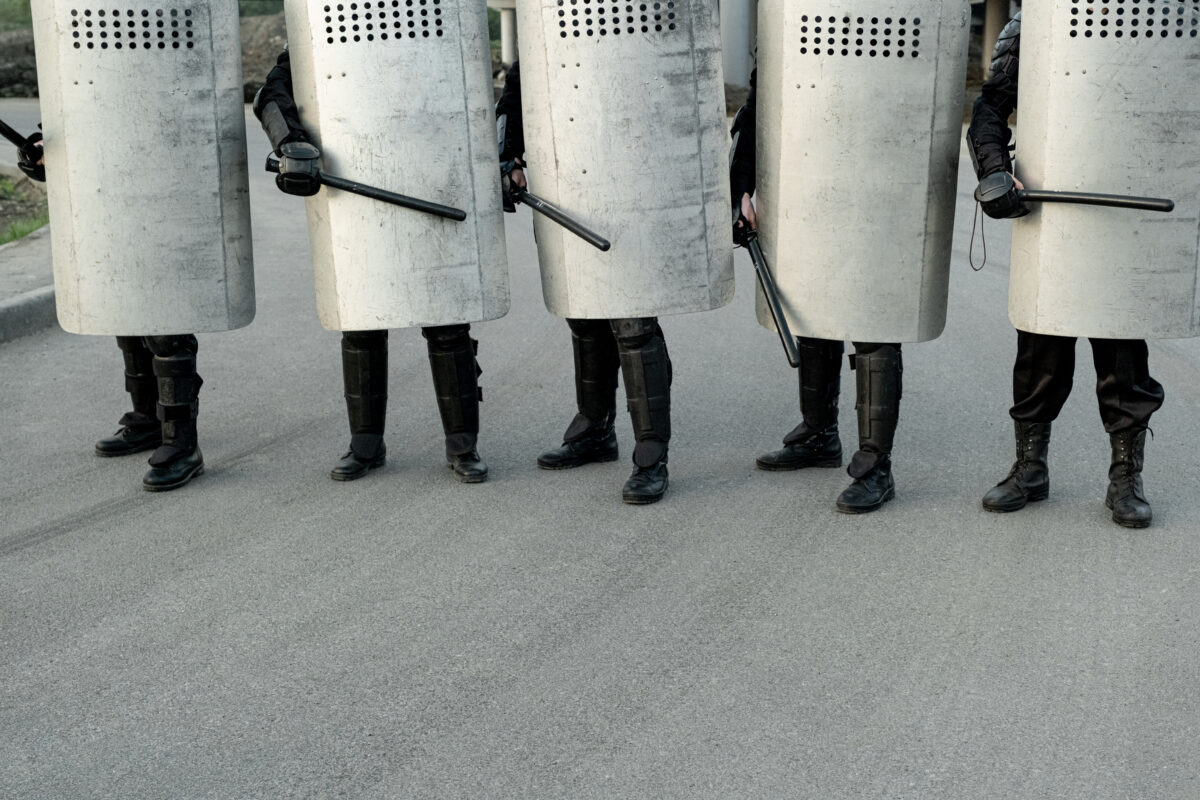
Modern riot shields are typically made from sheets of strengthened polycarbonate, which are lightweight and shatter-resistant against most projectiles besides gunfire. Quality shields are tested under rigorous conditions to make sure they can withstand and absorb tremendous blunt force without breaking. For example, to test their strength, riot shields are tested against rubber batons, steel objects, projectiles such as bricks, and even vehicle crash tests.
The service life of a riot shield can vary depending on factors such as usage and environment, which we’ll discuss below. However, a well-maintained and properly stored riot shield that has not faced frequent exposure to impacts can last for over five years.
Ballistic Shield Materials
Ballistic shields tend to be made from either aramid fibres, such as Kevlar, or ultra-high-molecular-weight polyethylene (UHMWPE). Pound-for-pound, aramid fibres are stronger than steel, and they can withstand extreme temperature fluctuations. Like aramid fibres, UMHWPE is much stronger than steel, but it also has a higher tensile strength than aramid fibres despite being lighter. However, aramid fibres can withstand higher temperatures and environmental stress.
The lifespan of a ballistic shield varies based on its materials and the factors we’ll discuss below. However, if it doesn’t sustain multiple hits, a ballistic shield can last for well over five to ten years.
Factors That Affect Riot and Ballistic Shield Durability
Besides material strength, here are the key factors that determine the lifespan and durability of riot and ballistic shields:
Usage Frequency
Naturally, the more often you use your shield, the faster it will wear out. If you frequently use your shield in high-risk situations, such as against active shooters or during riots, you can expect it to degrade faster than if you only use it for occasional training practices. If your shield takes a beating during a field exercise, you should check for signs of damage before using it in a high-risk situation again. For example, many police departments replace ballistic shields after the first impact from gunfire.
Types of Threats
Not all ballistic shields are designed to withstand all ballistic and projectile threats. For example, if you use a shield intended to withstand handgun rounds in a situation against a rifle, one rifle round impact may be enough to penetrate the shield. Similarly, while riot shields are tested under extreme pressure and against heavy impacts, frequent heavy impacts from heavy projectiles will shorten their lifespan. If you notice cracks, chips or cloudiness, you might want to replace your riot shield.
Maintenance and Storage
You can significantly extend the lifespan of your shield by staying on top of maintenance and storing it responsibly. It’s best to store shields away from direct sunlight to avoid UV damage. Also, we recommend cleaning your shield to make sure that accumulations of dust and debris don’t speed up the rate of material degradation.
Accreditation
Last but not least, certifications can give you an idea into the durability of a riot or ballistic shield. Certified ballistic shields in the USA come with an NIJ (National Institute of Justice) rating, which details the calibre of rounds that the shield can withstand. As of 2025, the ratings are HG1, HG2, RF1, RF2, and RF3. HG stands for handgun, while RF stands for rifle. The higher the number, the better the shield’s ballistic capabilities.
Throughout most of Europe and the UK, most shields come with a VPAM level of 1 to 14. Again, the higher the number, the better the shield’s ballistic capabilities.
Browse the World’s Most Advanced Range of Riot & Ballistic Shields
If you’re searching for tough, durable and long-lasting riot and ballistic shields, you’ve come to the right place. At The Survival Island, we’re a team of highly experienced survival and wilderness experts that sources the most technologically and materially advanced protective items from the far corners of the globe. Whether you need strong and lightweight riot shields for crowd control or a ballistic shield capable of withstanding high-calibre rifle rounds, we’ve got you covered. If you have any questions or concerns, don’t hesitate to call us.