
No products in the cart.
How To
How is Bulletproof Clothing Made and What is it Made From?
14
Jan
Jan
If you’re looking for a covert way to bolster your personal safety in an increasingly hostile world, you might be interested in bulletproof clothing. Bulletproof t-shirts, hoodies and vests can look indistinguishable from casual clothing. In certain situations, they can also save your life.
We should note that John Wick-style suits that deflect rounds without causing the wearer to flinch remain a work of Hollywood. It’s always best to avoid dangerous situations where possible and remember that no item of body armour is without limits or 100% fail-safe. However, covert bullet-resistant clothes such as hoodies and t-shirts can provide effective protection against light handgun rounds. You can also browse clothes fitted with pockets for armour inserts that have higher protective capabilities.
If you anticipate facing threatening or dangerous circumstances, such as if you’re employed by the police or military, you may prefer ballistic vests. They’re less covert than our bullet-resistant clothing, but they can protect against rifle rounds.
In this guide, we’ll tell you how bulletproof clothing is made and from which materials so that you can decide whether it’s the right choice for your personal safety needs. If you need any advice, give one of the experts here at The Survival Island a call.
What is Bulletproof Clothing Made From?
Bulletproof t-shirts, hoodies and vests are usually made from either one of or a combination of the following materials:
Ultra-High-Molecular-Weight Polyethylene (UHMWPE)
UHMWPE is becoming increasingly popular with manufacturers because of its light weight and incredible strength. It’s even lighter than high-density polyethylene despite being much stronger. This durable material is made by spinning a specialised gel into fibres that consist of long strands of polyethylene chains, and it’s the length of these strands that makes the final product so strong.
Aramid Fibres
Aramid fibres were developed back in the 70s as a more economical, strong and durable alternative to nylon. However, it didn’t take long for manufacturers to recognise its potential in the field. Today, this ballistic material is more commonly known as Kevlar, which is one of the world’s largest manufacturers of aramid fibres. Like its counterpart, UHMWPE, Kevlar is first transformed into a liquified chemical compound that is then spun into a solid thread. Individual threads are spun together to form the final aramid fibres.
Now that you have an insight into the most popular bullet-resistant clothing materials, let’s take a closer look at how they’re used to make bulletproof clothing.
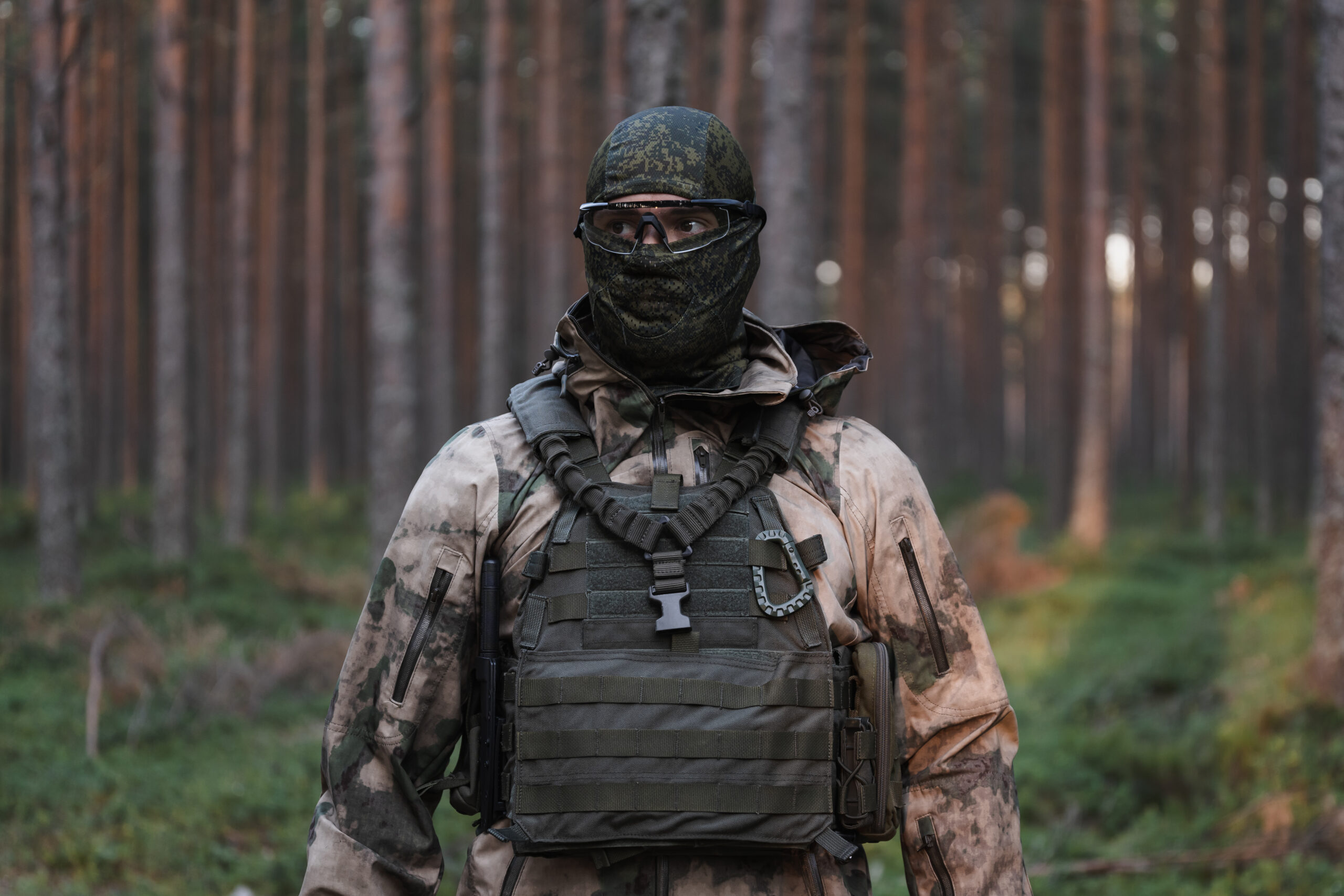
Bulletproof Clothing Manufacturing Process
We’ve just had a look at how raw materials such as UHMWPE are transformed into fibres. Now, let’s see how these fibres become usable items of bullet-resistant clothing.
1. Creating the panels
The fibres, whether Kevlar or UHMWPE, are woven together to create sheets of fabric, which are then sewn together into layers. A heat-sealing process using extreme pressure laminates these layered sheets into place. Once fused, the ballistic panel is cooled to harden.
2. Covering
The quality and protective capabilities of ballistic panels can degrade due to UV and moisture exposure. So, the panels are inserted into protective covers, like placing pillows into cases. Once covered, the ballistic panels can be integrated into items of clothing.
3. Garment integration
It takes a skilled tailor to expertly stitch the bullet-resistant panels of Kevlar of UMHWPE into t-shirts, hoodies and other items of clothing. Most bullet-resistant clothes aren’t made entirely of ballistic panels as this would reduce flexibility and comfort. Instead, the panels cover your most vulnerable areas. They essentially replace large sections of the t-shirt’s original material.
4. Panel inserts
Some items of bulletproof clothing feature pockets that are designed to securely hold ballistic inserts or bullet-resistant panels. This can increase the garment’s protective capabilities, but often at the expense of being virtually invisible. However, inserts in vests or t-shirts concealed under jackets are often virtually undetectable to the untrained eye. You can even purchase backpacks with panel inserts to bolster your personal safety even further.
Now that you have an insight into how bulletproof clothing is made, let’s take a quick look at just how effective it can be.
How effective is Bulletproof Clothing
It’s worth quickly noting again that no item of bulletproof clothing, no matter how high its specs, is 100% fail-safe. Avoiding dangerous situations whenever possible is always the best way to stay safe. Nevertheless, you can gauge the capabilities of an item of bulletproof clothing by checking its NIJ rating, assuming it has one.
The National Institute of Justice (NIJ) has created a standardised way to test the defensive capabilities of body armour and bulletproof clothing. Manufacturers that comply with the NIJ’s strict testing requirements can obtain certification and an NIJ rating. Each of the five NIJ ratings tells you whether an item can withstand handgun or rifle rounds. For example:
- Level HG1 (formerly Level II): .357 Magnum ammunition and NATO-issued 9mm rounds
- Level HG2 (formerly Level IIIA: .44 Magnum and .357 Sig.
- Level RF1 (formerly Level III): NATO .308 battle rifle and .223 Remington rounds
- Level RF2 (formerly level III+): 5.56×45 (M855) and .30-06 JSP rounds
Due to manufacturing, weight and mobility limitations, most items of bulletproof clothing such as t-shirts and hoodies offer protection against light handgun rounds only. If you anticipate facing more significant threats, you might want to check out our range of bulletproof vests or search for clothes that feature pockets for armour inserts.
Learn more about Bulletproof Clothing
While we all hope we will never have to put them to the test in a real-world scenario, bullet-resistant and bulletproof items of clothing and armour have saved countless lives. With threats growing in many parts of the world, now might be the time to invest in covert bulletproof clothing to bolster your personal safety.
At The Survival Island, we’re a team of wilderness and survival experts that scours the far corners of the globe for the most advanced products on the market. And we aim to make them available to you at the world’s best-value prices. If you need advice or recommendations, don’t hesitate to get in touch.